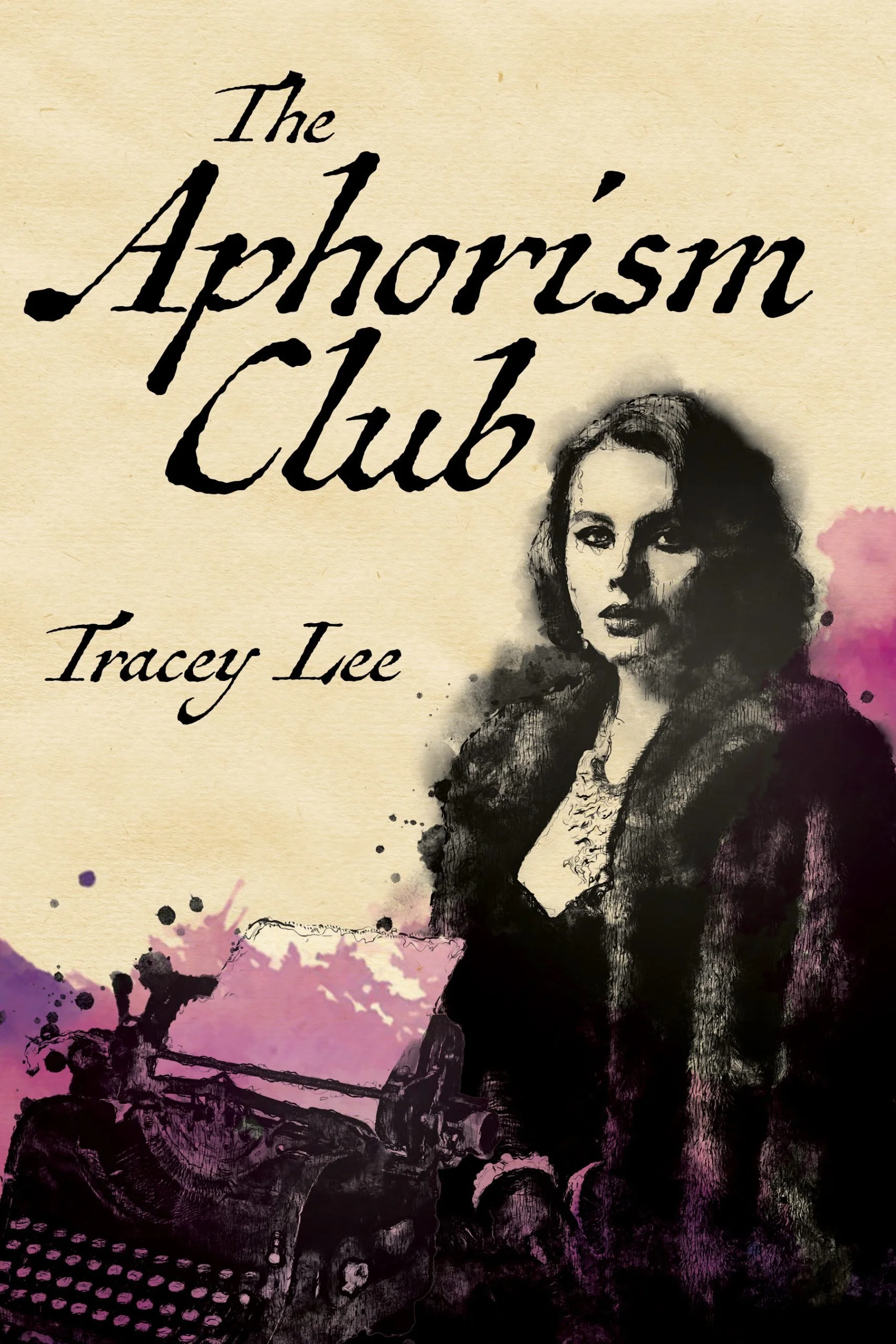
Tracey Lee’s The Aphorism Club is, at heart, a coming-of-age novel about a young woman learning not merely how to survive the world she has inherited, but how to argue with it.
Ruby Pearl Hart is born in Melbourne in 1910 with a prominent facial birthmark and into a family inclined to regard both her appearance and her ambitions as burdens. Yet Ruby is intelligent, observant and stubbornly unwilling to accept the narrow life prescribed for her. Through bereavement, rejection, displacement and violence, she develops the quality that ultimately defines her: the determination to think for herself.
When Ruby is sent to Launceston, Tasmania, she encounters the loose collection of artists, writers and outsiders who give the novel its title. The Aphorism Club offers her something her biological family often cannot: intellectual companionship, affection without qualification, and permission to imagine a larger life. Among them is Lawton, the beautiful young man with whom Ruby falls in love, alongside journalists, artists and people living beyond the social conventions of their time.
Lee’s novel is driven by incident. Ruby moves through a succession of hardships that expose the brutal limitations imposed upon women in the early twentieth century: restrictions upon education and work, sexual hypocrisy, domestic power, poverty, violence and the persistent assumption that a woman’s future should be determined by someone else.
Some of the novel’s most confronting moments involve girls and women who have far fewer choices than Ruby. A pregnant thirteen-year-old dies after giving birth without proper assistance; Ruby herself is later violently attacked; and a devastating storm destroys homes and lives. Out of these experiences Ruby begins to understand what kind of writer she wants to become: one who tells the stories of people whose suffering might otherwise go unseen.
That gives The Aphorism Club its contemporary force. Its feminism is not especially complicated, nor does it need to be. It rests upon something more fundamental: the proposition that women should be free to determine the shape of their own lives.
At a time when even those basic principles are again being questioned in parts of public discourse, Ruby’s struggle feels unexpectedly timely. Lee reminds us that freedoms acquired by one generation are not necessarily permanent possessions of the next.
Above all, this is a novel about finding a voice, and then having the courage to use it.